






Running the washing machine at the right time can make a big difference to your energy bill. Knowing the best time to use it not only helps you save money, but also makes you more sustainable.
Electricity rates vary throughout the day, and choosing the right time can significantly reduce costs.
This article will guide you on how and when to run your washing machine today to maximise efficiency and savings, whilst incorporating practices that also benefit your home’s sustainability.
Why is it important to choose the best time to run the washing machine?
Choosing the best time to run the washing machine is crucial for saving on your energy bills. Electricity prices fluctuate throughout the day, depending on demand.
Using the washing machine at times of lower demand can result in significant savings.
Many electricity suppliers offer reduced rates during off-peak hours. These are periods when energy consumption is low.
Choosing these times is not only good for your wallet, but also for the environment.
Furthermore, by using energy responsibly, you contribute to a more sustainable home, a shared priority in energy-efficient A-rated buildings such as those by Marina d'Or Construcciones.
Reasons to consider choosing the right time:
- Savings on energy costs.
- Reduction in your carbon footprint.
- Extending the washing machine’s lifespan.
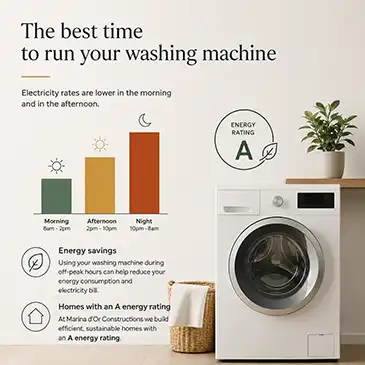
Electricity tariffs and savings: what is the cheapest time to run the washing machine today?
Electricity rates vary considerably throughout the day. During peak hours, when usage is at its highest, the cost of energy is higher. Therefore, knowing when to run the washing machine can make a big difference to your bills.
Most suppliers offer lower rates during off-peak hours. These periods are usually at night or early in the morning.
Taking advantage of these times can result in significant long-term savings.
It’s important to check your energy supplier’s tariff policy. Knowing when rates are cheapest is essential for maximising your savings.
Tips for maximising your savings:
- Check the off-peak hours on your supplier’s website.
- Consider doing your laundry after 10 pm or before 8 am.
- Check for any seasonal changes in rates.

Using the washing machine during off-peak hours isn’t just financially beneficial. It also helps distribute the electricity load more evenly.
This contributes to a more stable and efficient electricity grid. Therefore, good planning can have a positive impact beyond your own finances.
How to prepare your laundry before putting a wash on
Preparing your laundry properly before washing is crucial for achieving the best results and extending the life of your clothes. Start by sorting your laundry by colour and fabric type. This will prevent dark colours from bleeding onto lighter ones and delicate fabrics from being damaged.
Checking pockets is essential to avoid accidents during the wash. Forgotten items can cause problems for both your clothes and the washing machine. Also, turn printed garments inside out to protect the design and reduce wear and tear.
It is important to undo buttons and zip up zips. This prevents them from getting caught during the wash. You should also pre-treat stubborn stains to make them easier to remove. Here are some key tips:
- Wash similar items together: sheets with sheets, towels with towels.
- Use a laundry bag for very delicate items.
- Do not overload the drum.
By following these steps, you’ll ensure an efficient clean whilst looking after your clothes and your washing machine. By following these tips, you’ll enjoy the best results with every wash, minimising wear and tear and maximising cleanliness.
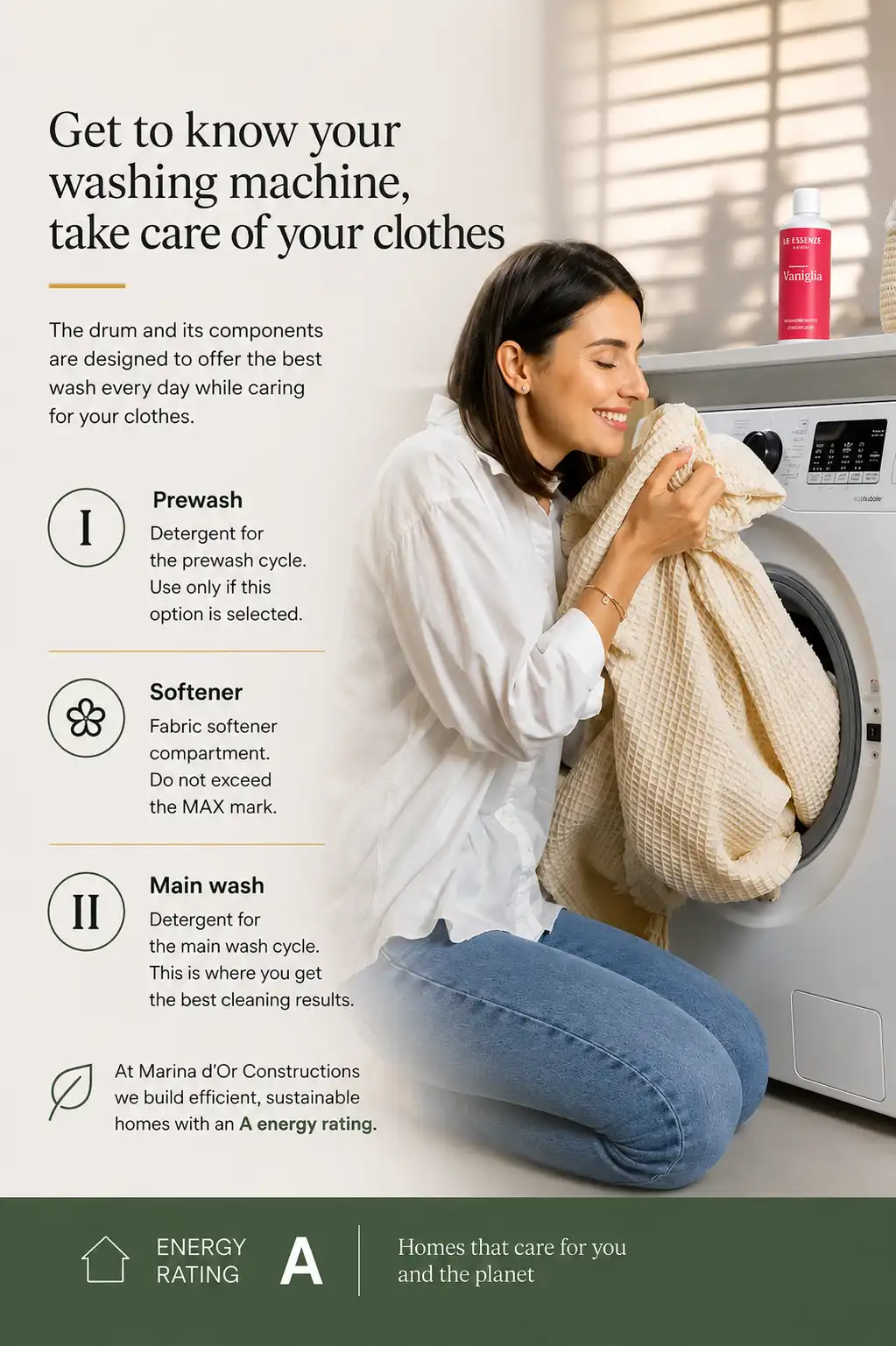
Where to put the detergent and fabric softener in the washing machine
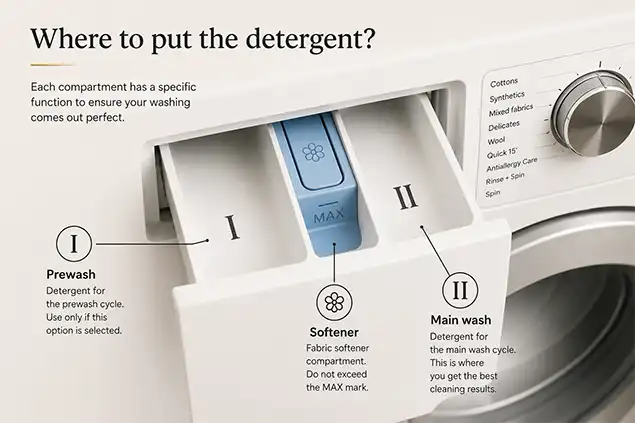
Putting detergent and fabric softener in the right place is vital for effective washing. Most washing machines have a dispenser divided into specific compartments. These are usually labelled, but it’s important to know how to use them correctly.
The largest compartment is usually for detergent. This is where you put standard or powder detergent. If you use liquid detergent, this also goes in this compartment, unless otherwise stated.
Fabric softener generally goes in a smaller compartment. This is usually located in the centre and is marked with a flower symbol. Be careful not to exceed the maximum fill line.
It is important not to mix detergent and fabric softener in the same compartment, as this can affect the washing performance. Here is a summary of where to place each product:
- Compartment 1: Pre-wash (if applicable)
- Compartment 2: Detergent
- Compartment 3: Fabric softener
 Make sure you use the correct amount of each product according to the manufacturer’s instructions. Using too much can lead to residue on your clothes and in the washing machine. With these simple steps, you’ll optimise the washing process and protect your clothes.
Choosing the right programme: washing machine programmes and their impact on energy consumption
Selecting the correct wash programme is essential for maximising energy efficiency and protecting your clothes.
Each programme is designed for different types of fabric and levels of soiling. Options range from quick programmes to longer cycles specifically designed for certain garments.
Cold-water programmes are ideal for light, lightly soiled laundry. They consume less energy as they do not need to heat the water.
On the other hand, hot-water cycles are perfect for heavily soiled laundry or items requiring disinfection, but bear in mind that they use more energy.
The duration of the cycle also affects energy consumption. Short programmes are efficient for daily washes, but for larger loads or heavily soiled clothes, it is better to opt for longer cycles.
Some models also offer eco-friendly programmes that balance water and energy usage.
When choosing a programme, consider these aspects:
- Fabric type: Cotton, synthetics, delicates
- Level of soiling: Light, medium, heavy
- Water temperature: Cold, warm, hot
- Cycle duration: Quick, normal, intensive
 Choose the programme that best suits your needs to save energy and maintain the quality of your clothes. Make the most of your washing machine’s features to make the process more sustainable and economical.
Tips for running a washing machine efficiently and sustainably
Using a washing machine efficiently not only saves money but also benefits the environment. Adopting certain practices can make a big difference to resource consumption and the appliance’s lifespan.
A full load is always more efficient. However, avoid overloading the washing machine, as this can affect performance and cause wear and tear on the machine. Always balance the load to prevent vibrations and ensure a more effective wash.
Opt for cold water whenever possible. This simple change significantly reduces energy consumption. It is also gentler on fabrics, helping to keep your clothes in better condition for longer.
Here are some tips for efficient washing:
- Use concentrated detergents: You need less of them.
- Select an optimal spin cycle: This reduces drying time.
To improve sustainability:
- Eco-friendly programmes: Use less water and energy.
- Avoid excessive use of fabric softeners: They can damage certain fabrics.
Remember, simple practices such as leaving the door open after each use prevent damp and mould.
These simple steps not only improve your washing machine’s efficiency but also help care for the planet.
Washing machine maintenance: tips for extending its lifespan and preventing breakdowns
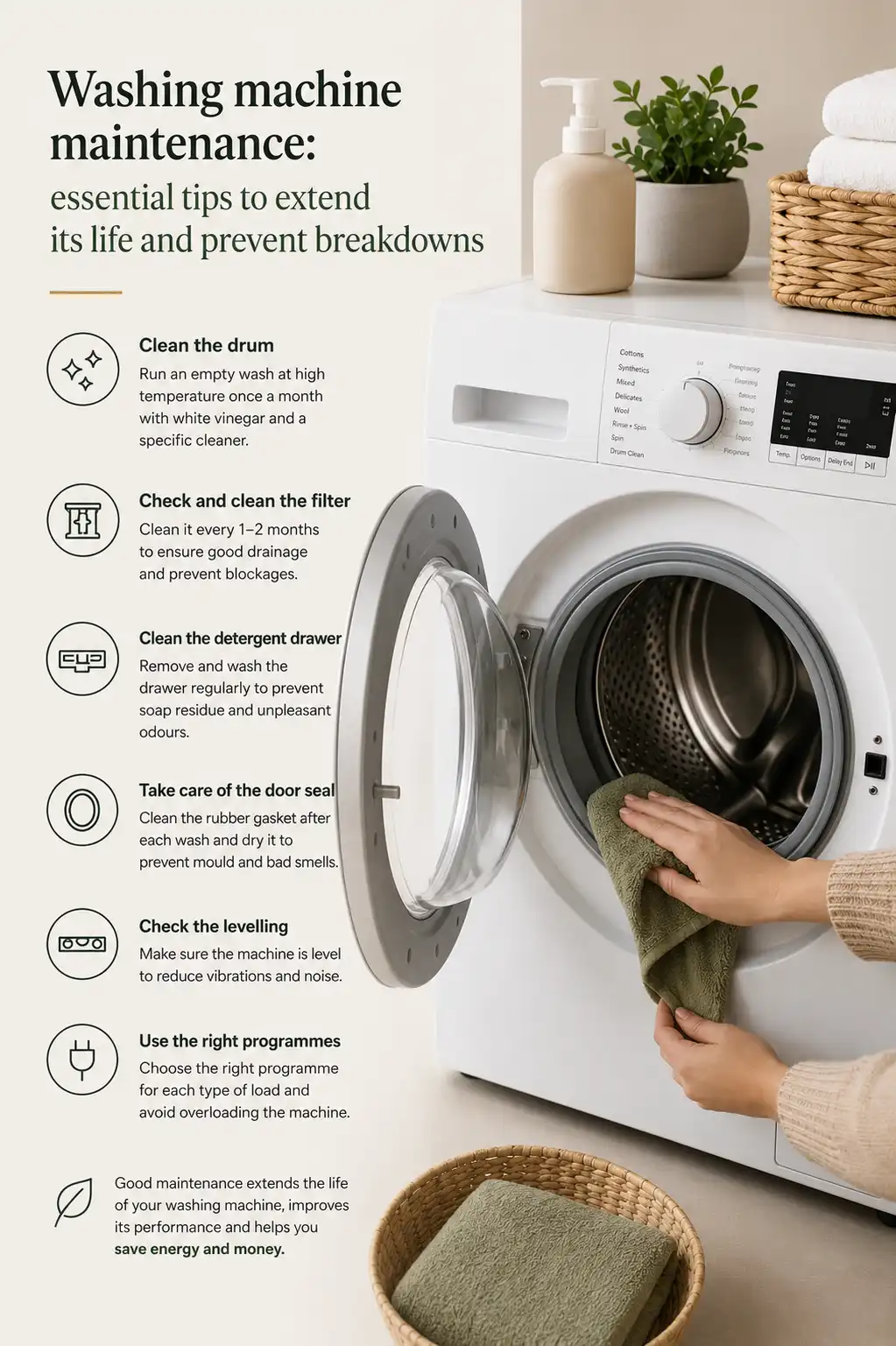
Proper washing machine maintenance is crucial for extending its lifespan. A well-maintained washing machine can prevent costly repairs and ensure optimal performance for longer. Taking the time to look after it will help you avoid unpleasant surprises.
A vital component is the filter. Clean the filter regularly to keep the water flow free of blockages. A blocked filter can cause faults in the wash cycle and consume more energy.
Pay attention to the rubber seals, too. These accumulate limescale and mould, which can not only cause unpleasant odours but also affect the washing machine’s performance.
Wipe these parts down with a damp cloth from time to time.
Here are some essential tips:
- Clean the drum: Use a high-temperature wash cycle.
- Check the hoses: Inspect the connections and look for leaks.
- Use cleaning products specifically designed for washing machines: These are designed to remove limescale without causing damage.
With simple, regular care, you can ensure your washing machine continues to run efficiently for years to come. By following these tips, you’ll avoid major problems and optimise its performance in the long term.
Frequently asked questions about using the washing machine today
When using the washing machine, many questions arise. Here we’ll answer some of the most common ones to help you improve your washing experience.
Closed
When is the best time to do the washing?
How much washing-up liquid should I use?
What should I do if my washing machine smells bad?
Clean the drum and seals regularly, and leave the door open after washing.
Here are some key points:
- Avoid overloading: This reduces wear and tear on the machine.
- Choose the right programme: Depending on the type of fabric and how dirty it is.
- Use fabric softeners with care: They can affect long-term maintenance.
Conclusion: how to make the most of your washing machine every day
Optimising your washing machine’s use not only saves money but also extends its lifespan. Always start by selecting the most cost-effective electricity tariffs. Incorporate regular maintenance routines and choose efficient wash cycles.
Furthermore, if you are in the process of looking for a home, consider properties with category A energy efficiency, such as those in Marina d'Or. This approach not only guarantees savings on your bills but also a commitment to a more sustainable future.