



Air-source heat pumps: why is everyone talking about them?
Aerothermal energy has moved beyond being a technical term to become one of the most highly regarded heating and cooling systems in the residential sector.
More and more people are taking an interest in this technology because of its efficiency, sustainability and energy savings.
It is now considered a modern and reliable alternative to traditional systems such as natural gas or electric radiators.
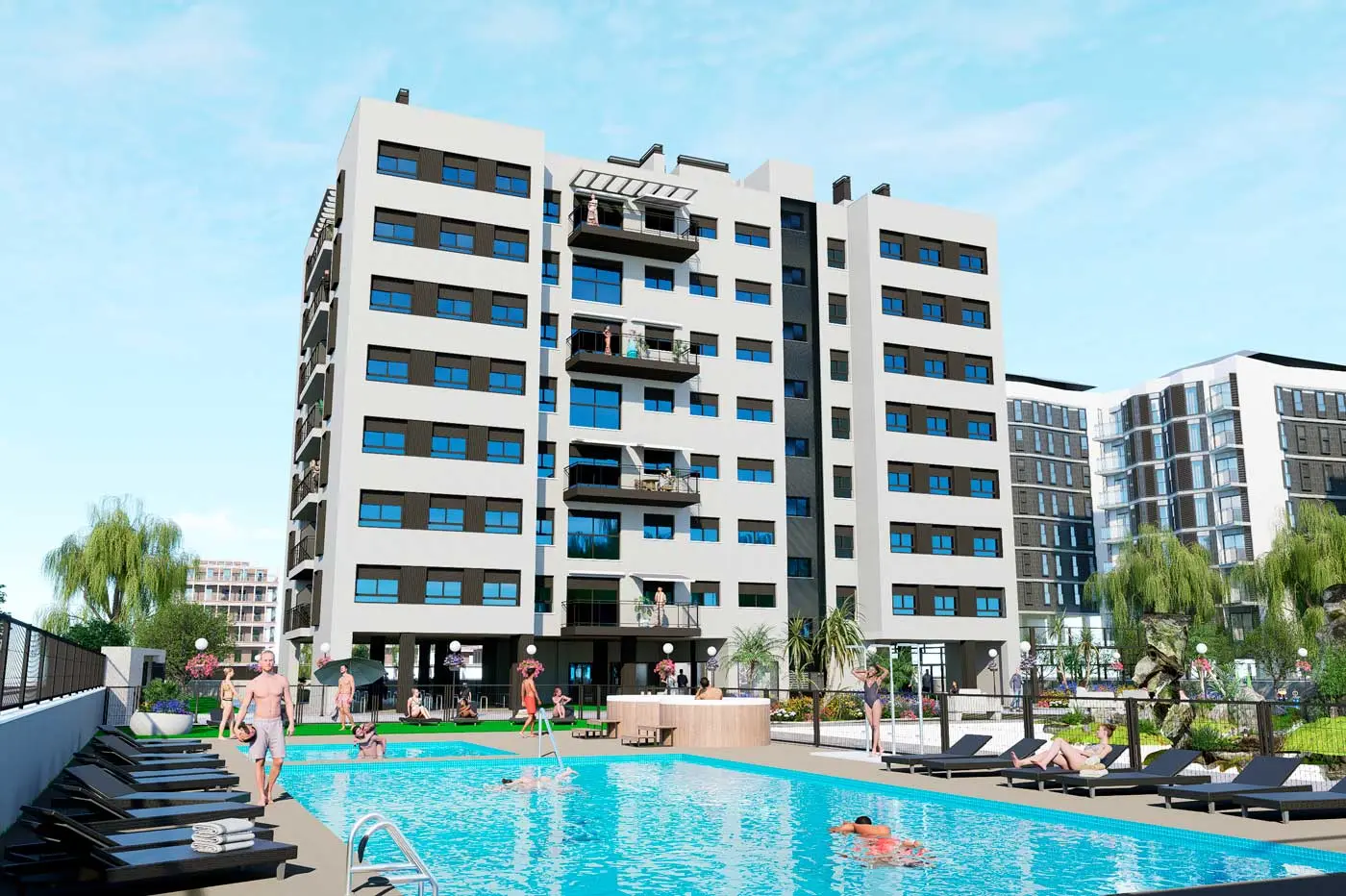
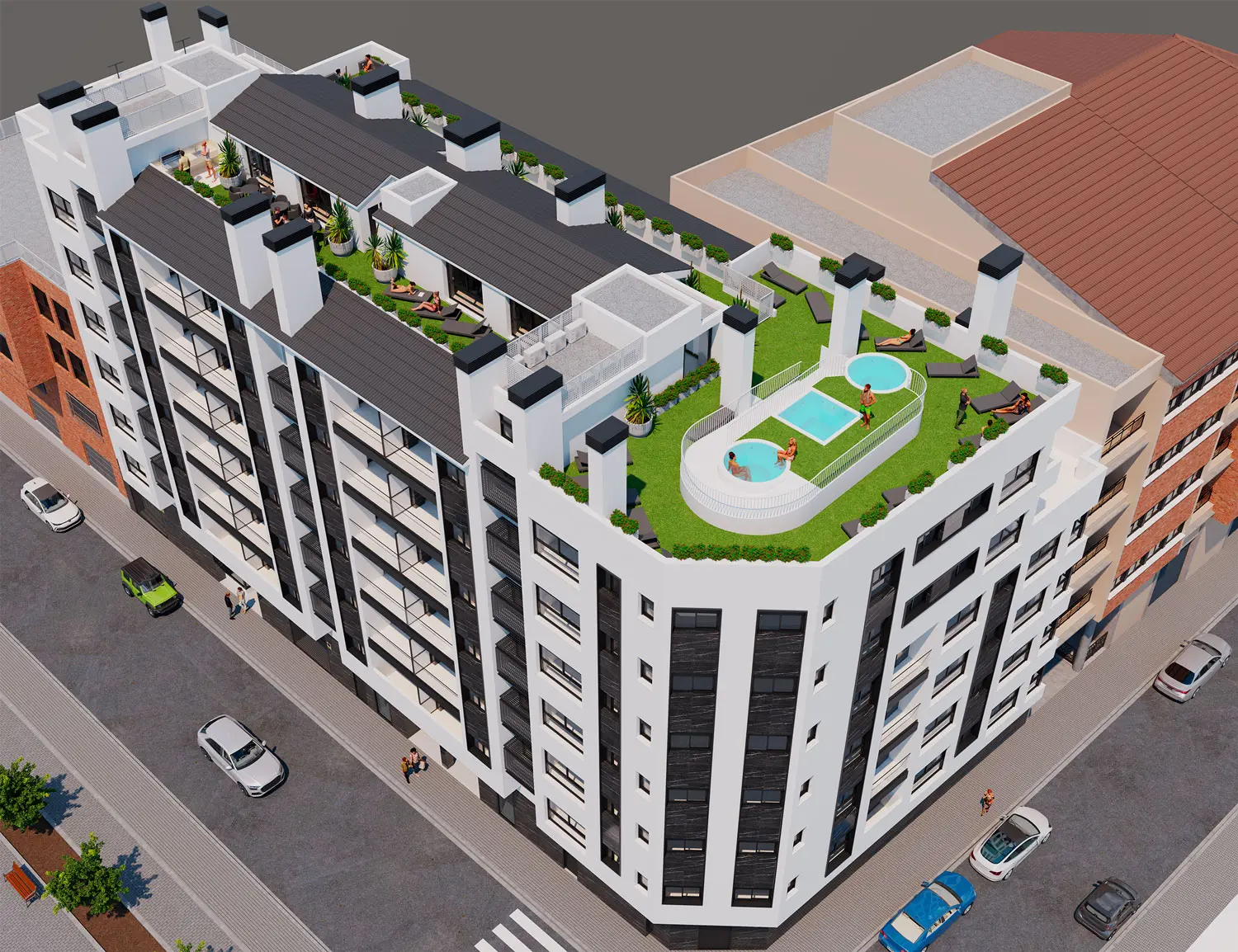
Many new-build developments now include it as standard, such as the flats by Marina d'Or Construcciones, which incorporate aerothermal systems as part of their commitment to energy efficiency.

How does geothermal energy work?
A clear explanation without technical jargon
Aerothermal energy works via an aerothermal heat pump, designed to extract thermal energy from the outside air, even at low temperatures, and transfer it into the home for heating, cooling or domestic hot water (DHW) production.
This process is based on a thermodynamic cycle similar to that of a fridge or air conditioner, but optimised to generate both heat and cold with much greater efficiency.
For every kilowatt-hour (kWh) of electricity consumed, the system can generate up to 4 kWh of thermal energy, which translates to a coefficient of performance (COP) of 4.
It requires no boilers, gas or fossil fuels. It is an electric, clean and safe system, compatible with underfloor heating, fan coils or low-temperature radiators.
The benefits of geothermal heating: savings, comfort and sustainability
Air-source heat pumps offer numerous benefits, which have boosted their popularity in both new and renovated homes:
1. Energy savings
The system’s efficiency significantly reduces electricity consumption compared to conventional solutions. In many cases, a reduction of 30% to 60% in heating and cooling costs is achieved.
2. Stable thermal
comfort The indoor temperature remains constant and comfortable all year round, without the sudden changes or dry air typical of other systems.
3. Reduced emissions
As it does not use fossil fuels, aerothermal energy helps to reduce the carbon footprint and improve air quality.
4. Quiet operation and low maintenance Modern
systems operate at very low noise levels and require minimal maintenance.
5. Increased property value
Homes with aerothermal systems tend to be valued higher on the market due to their energy efficiency, a feature that is increasingly in demand.
Air-source heat pumps vs other HVAC systems: a technical comparison
| System | Energy used | Operating costs | Maintenance | Emissions | Initial investment |
|---|---|---|---|---|---|
| Natural gas | Fossil fuel | Medium | Medium | High | Medium |
| Electric radiators | Direct electricity | High | Low | Medium | Low |
| Air conditioning | Direct electricity | High in winter | Medium | Medium | Medium |
| Pellets | Biomass | Low | High | Low | High |
| Air source heat pump | Electricity + air | Very low | Very low | Very low | Medium |
Air-source heat pumps vs other heating and cooling systems: a technical comparison
As this is a relatively new technology in the residential sector, a number of misconceptions still persist:
- “It only works in warm climates” Modern
aerothermal systems are capable of operating efficiently even at temperatures as low as -20°C, thanks to improvements in compressors and refrigerants. - “It doesn’t provide enough heating”
The systems are designed to deliver high thermal performance, especially when combined with suitable heat emitters such as underfloor heating or fan coils. - “It’s expensive to install”
In new-build homes such as those by Marina d'Or Construcciones, aerothermal systems are fitted as standard, avoiding additional costs and allowing you to benefit from them from day one. - “It takes up a lot of space”
The indoor units are compact and the outdoor unit is no larger than a standard air conditioning unit.
How much can you save with geothermal heating?
The savings offered by aerothermal energy vary depending on the type of home, the insulation, the supplementary system used and consumption habits. However, various studies and user experiences indicate:
- Reductions of 30% to 60% in heating costs compared to gas or electric systems.
- Reduced cooling consumption in summer, compared to conventional split systems.
- Significant savings on DHW, particularly when combined with solar panels.
This level of efficiency translates into an investment that pays for itself quickly, particularly in well-insulated homes.

Air-source heat pumps in new-build flats: the case of Marina d'Or Construcciones
One of the key factors behind the rise of geothermal energy is its integration into new-build developments.
A prime example is Marina d'Or Construcciones, which has incorporated this technology into all its recent flats as a standard of quality and efficiency.
This removes barriers to entry for the end user: the system is already installed, sized and adapted to the property’s specifications.
It requires no subsequent renovations or modifications. Furthermore, it is optimised to blend seamlessly with the rest of the architecture and improve the property’s energy rating.
Choosing a home with aerothermal energy already installed, such as those in the Edificio Sol, provides real added value in terms of both comfort and long-term savings.
Air-source heat pumps in summer and winter: performance all year round
One of the most valued aspects of aerothermal energy is its ability to provide efficient climate control all year round:
- In winter, it provides constant heating without the consumption peaks or dry air typical of other systems.
- In summer, it provides quiet and even cooling, without the draughts of split-system air conditioners.
- In spring and autumn, it can be used solely to produce domestic hot water, at minimal cost.
This versatile performance makes aerothermal energy an ‘all-in-one’ solution adapted to the changing climate and comfort needs throughout the year.
Maintenance of an air-source heat pump system
The maintenance required for an air-source heat pump system is far less than that of traditional systems. It generally includes:
- An annual preventive service, carried out by an authorised technician.
- Regular cleaning of the indoor system’s filters.
- Checking the outdoor unit to ensure it is properly ventilated and clean.
It requires no purging, frequent replacements or combustion checks, which represents a significant operational advantage.
Why does geothermal heating make all the difference in today’s homes?
Aerothermal energy has gone from being an innovative option to becoming a standard in modern residential construction.
Its efficiency, sustainability and comfort make it the ideal choice for heating, cooling and hot water in the home.
Choosing a home that already includes aerothermal energy, such as those by Marina d'Or Construcciones, allows you to enjoy all its benefits from day one, without any building work or extra costs.
It improves the property’s energy rating, reduces reliance on fossil fuels and contributes to a more environmentally friendly lifestyle.
In a context where comfort and energy savings are increasingly valued, geothermal heating stands out as a smart and sustainable long-term investment.